
Gender dysphoria is the complex and sometimes intense experience of a feeling of disconnect between the gender you were assigned at birth and the gender you identify with. This discomfort can heavily impact your morale and well-being, and significantly affect your quality of life.
If you are going through this, know that you are not alone, and there are several ways to better live your identity! Understanding gender dysphoria is the first step, both for those who experience it and for their loved ones. 🤗
What is gender dysphoria?
The word « dysphoria » refers to a feeling of unease, which can range from discomfort to great distress. When we talk about gender dysphoria, we are referring to this discomfort that can be related to your gender, your body, how others perceive you, or even more administrative elements (like your identity documents).
📌 Important: not all trans people experience dysphoria, and it can evolve over time. Every journey is unique!
🎥 If you prefer watching a video to reading, this RTS video explains gender dysphoria very well, featuring testimonials from people who experience it ✨ :
🤔 Gender dysphoria VS gender incongruence
Gender incongruence is simply when your gender identity (the gender you identify with) does not match the one you were assigned at birth. Gender dysphoria specifically refers to an emotional and psychological distress that can result from this mismatch. This distinction is important because dysphoria often requires appropriate support during social, administrative, and/or medical transition.
How to recognize gender dysphoria?
Gender dysphoria manifests uniquely for each person, but some manifestations are more common than others.
🫂 Body-related dysphoria
- Discomfort with certain parts of your body.
- The desire to change your appearance (clothing, makeup, surgery, etc.).
- Discomfort during moments like showering or getting dressed.
💬 Social dysphoria
- Anxiety when others use incorrect pronouns or agreements (misgendering).
- Discomfort in gendered spaces (changing rooms, restrooms).
- The feeling of not being seen as your true self.
📝 Administrative dysphoria
- Frustration with your official documents that do not match your gender.
- Forms and procedures that force you to choose between 'man' and 'woman' with no other option.
- The feeling of not legally existing as the person you are.
The impact on daily life
🫀 On an emotional level
Dysphoria can affect mental health and lead to periods of anxiety and depression.
- A poor self-image is often a consequence of these difficult emotions.
- Isolation linked to the feeling of being alone in experiencing this can be observed.
🏠 On a social and family level
An impact on interpersonal relationships is sometimes observed. Some people find it difficult to be their full selves with loved ones who don't understand.
In a professional context, dysphoria can affect self-confidence and complicate interactions with colleagues. Managing gendered professional situations often requires considerable energy, which can impact career progression if your work environment is not understanding or open.
😞 Dysphoria crises
Sometimes, dysphoria can become particularly intense, to the point of overwhelming all your thoughts. These crises are difficult and require specific coping strategies and appropriate support.
How to alleviate gender dysphoria?
🧠 Finding psychological support
A trusted psychologist can help you find strategies to better manage your dysphoria and offer a safe space to explore your identity. Dysphoria cannot be 'cured' like an illness, as it is linked to your gender identity. Therefore, the therapist is there to support your reflection on the transition journey and help you face daily challenges.
If you don't have access to a therapist, you might find support at your local LGBTI+ association (there are many throughout France), or from a friend, a family member, or anyone you trust who can offer a listening ear and advice.
📝 À savoir : → The website bddtrans.fr lists practitioners who are respectful of transgender people and capable of listening to and welcoming you. You can also refer to the Fransgenre map, which is regularly updated.
👕 Using gender affirmation accessories
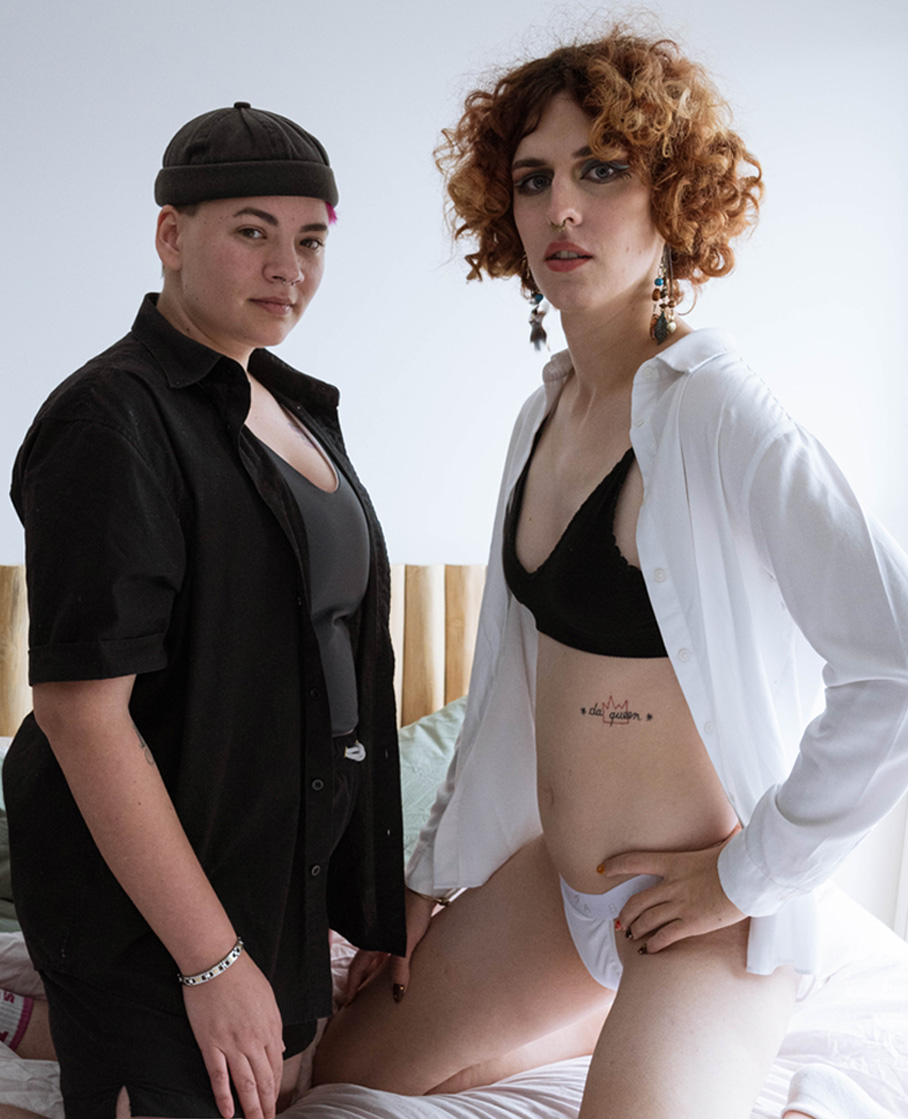
Certain accessories can significantly alleviate physical dysphoria and help you feel more comfortable in your own skin.
- Il y a les binders, qui ressemblent à des débardeurs pour aplatir le torse/poitrine,
- Packers, which can be used daily to create the effect of a bulge under clothing. These come in many different shapes and materials, and some are even designed to help reduce dysphoria during intimacy! 😏
- Tuckings, to conceal the crotch bulge that can form under clothing.
All these products are available in a multitude of models on our website, and we can create custom pieces if you have specific needs or requests.
However, be sure to follow the instructions carefully to use these accessories safely!
🤝 Surround yourself with the right people
The support of people who understand you can make all the difference. Whether online through social media (TikTok, Facebook, YouTube, etc.) or in person, many associations organize support groups and online communities where you can share your experiences and ask questions.
A network of understanding friends and allies strengthens this daily support.
What if we talked about gender euphoria?
Gender euphoria is that moment when you feel aligned with your identity. This could be by wearing clothes that feel right, hearing your chosen name or pronouns respected, or simply looking in the mirror and recognizing yourself.
Gender euphoria challenges the idea that trans people only experience gender dysphoria and that the history of transidentity is one of misery, which is not the case. For many, transidentity can be a very empowering and positive aspect of life, despite the obstacles.
FAQ: Answers to your questions about gender dysphoria
Is gender dysphoria a mental illness?
No! It is not a mental illness, but a distress related to your identity that deserves to be heard and taken seriously.
What to do during a dysphoria crisis?
- Avoid mirrors if it's too difficult.
- Do an activity that makes you feel good: music, sports, drawing, etc. Eat something comforting, take a warm shower, take a nap…
- Find a quiet place to take a break. At school or work, it can be very difficult to feel constantly exposed. Even if only a restroom is available, try to find a place where you can be alone and take time to breathe. Express your emotions through journaling, drawing, sports, breathing exercises, therapy (for those who can access it), or simply by confiding in trusted friends or family. Keep in mind that this feeling is temporary, it will pass, there are solutions, and things will get better.
- Change your gender expression. Try a new accessory or piece of clothing that makes you feel good, put mascara on your body hair to make it visible, shave... In any case, if you are experiencing dysphoria, it's important to know that you are not alone and that there are different ways to manage it. For this, we recommend finding an LGBT+ friendly healthcare professional who can help and guide you along your journey! 🤗
What support options are available?
Support can take several complementary forms: specialized psychological counseling, support groups, medical support if desired, and social support. Each person defines the type of support that suits them. MOST IMPORTANTLY, don't stay alone: associations and discussion spaces exist to help you.
📌 How to support a loved one experiencing gender dysphoria 💛
If a loved one is experiencing gender dysphoria, there are several ways to help and support them. Here are some practical tips:
- 💬 Listen and be kind: Don't minimize their feelings. Being a good listener without trying to "solve" the situation can be a huge relief.
- 📚 Educate yourself: Learn about gender dysphoria to better understand what they are going through and avoid unintentional missteps.
- 🌈 Respect their identity: Use their correct name and pronouns, even if it takes time to adjust.
- 🤗 Offer support without pressure: Everyone progresses at their own pace. Offer help with administrative procedures or finding resources, but without imposing anything.
- 🏡 Create a safe environment: Reducing situations that trigger dysphoria (avoiding comments on appearance, not forcing gendered clothing, etc.) helps a lot.
Your support can make a huge difference. Being an ally means helping the person feel seen, respected, and accepted. 💙
Conclusion and Resources
Gender dysphoria is a complex experience requiring understanding, appropriate support, and social backing. Many resources exist to support you on this journey. Don't hesitate to contact local associations or specialized healthcare professionals to receive the support you need.
Every journey is unique and valid, and everyone deserves to be supported and respected. Remember: You are not alone, and you deserve to feel comfortable in your body and identity. 💙
To learn more:

 Your cart is empty.